- Argentina
- Australia
- Bangladesh
- Belarus
- Belgium
- Brazil
- Bulgaria
- Canada
- China
- Costa Rica
- Egypt
- France
- Germany
- Hong Kong
- India
- Indonesia
- Ireland
- Israel
- Italy
- Japan
- Kenya
- Kuwait
- Malaysia
- Mexico
- Netherlands
- New Zealand
- Nigeria
- Pakistan
- Philippines
- Poland
- Qatar
- Romania
- Russia
- Saudi Arabia
- Singapore
- South Africa
- Spain
- Sri Lanka
- Sweden
- Switzerland
- Thailand
- Turkey
- UAE
- Ukraine
- United Kingdom
- United States


crowdreviews.com
Strategic Partner
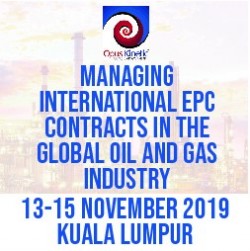
November 13, 2019 - November 15, 2019
Managing International EPC Contracts in the Global Oil and Gas Industry
Kuala Lumpur, Malaysia
Map Event Location Share this Event
Event Details
Begins: November 13, 2019
End: November 15, 2019
Event Location: Kuala Lumpur, Malaysia
Website: https://www.opuski..ndustry-2
Event Organizer
Event Organizer: Opus Kinetic Pte Ltd
Contact Person: Azfryna Kasenda
Phone Number: 6294 6415
Website: http://www.opuskinetic.com/
Overview
As the International Oil and Gas industry matures; competition has intensified as organisations seek different ways in which to achieve a sustainable competitive advantage. One response to this has been to adopt a form of ‘risk transfer’ via outsourcing to make another party the ‘bearer’ of risk –i.e. appointing a contractor company that offers a ‘one-stop shop’ solution – to undertake the whole scope of a project by being the main contractor and subsequently managing the entire range of sub-contractor agreements to ensure that the deliverable in question is met in its entirety for the client/end user.
These types of contract are often referred to as EPC (Engineering; Procurement and Construction contracts), whilst another common name for them is ‘Turnkey’ contracts. If the contract can be executed successfully, the contractor stands to benefit, whilst if there are problems and delays, it is the contractor who may find themselves liable for bearing these costs.
Unfortunately, given the scale and scope of this species of commercial contract, there is a great likelihood that most of the ambit of contractual misfortune in terms of breach; delay; quality issues; HSE compliance and local content issues (to name but a few) will manifest at some point during the project’s lifetime. This course will furnish delegates with a thorough understanding of the key components and their interactions of an EPC contract and will address issues relative to dispute resolution. Focus is on open dialogue and collective problem solving relative to case examples and class exercises. This course has been designed to provide an immersive, value adding experience to delegates who attend.
STAY IN TOUCH


Subscribe to our newsletter.
©2026 CROWDREVIEWS.COM, LLC. All Rights Reserved.
Claim a Profile on CrowdReviews.com
ENHANCE YOUR PROFILE
Claim and update your profile to ensure potential customers get the best impression on what you have to offer.
 Searching for more matching results...
Leave A Review on CrowdReviews.com
